Black Holes Lesson Plan
Hook and Big Idea
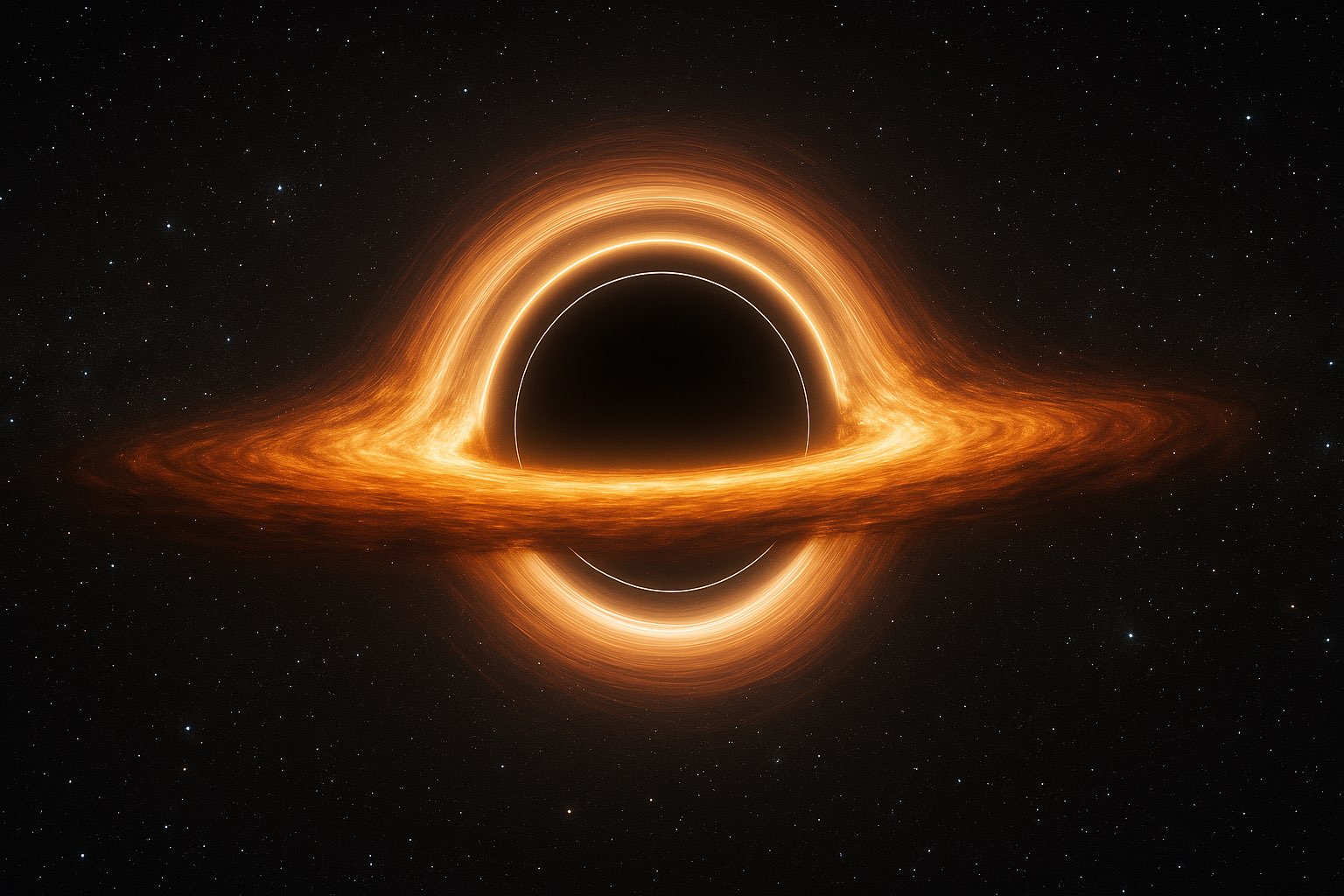
Definition (2 sentences): A black hole is a region where spacetime is curved so strongly that the escape speed exceeds
Safety rail: black holes are not cosmic vacuum cleaners—far away, gravity acts like any object of the same mass, so stable orbits exist.
c, so light can’t get out. The “point of no return” is the event horizon, a boundary in spacetime (not a surface).Safety rail: black holes are not cosmic vacuum cleaners—far away, gravity acts like any object of the same mass, so stable orbits exist.
Essential Qs
- What are black holes (and what counts as “inside”)?
- How do we detect something that’s “black”?
- Why are they important for physics, galaxies, and cosmic history?
Teacher move: Ask students to list effects of gravity that could reveal an unseen object.
Quick hook question: If the Sun were replaced by a black hole with the same mass, what happens to Earth’s orbit?
(This single idea fixes the “vacuum cleaner” misconception early.)
- Far from the event horizon: orbit stays essentially the same
- Near the horizon: tides, accretion, and relativity dominate
(This single idea fixes the “vacuum cleaner” misconception early.)
Why it matters
- Extreme gravity lab: test general relativity where it’s strongest
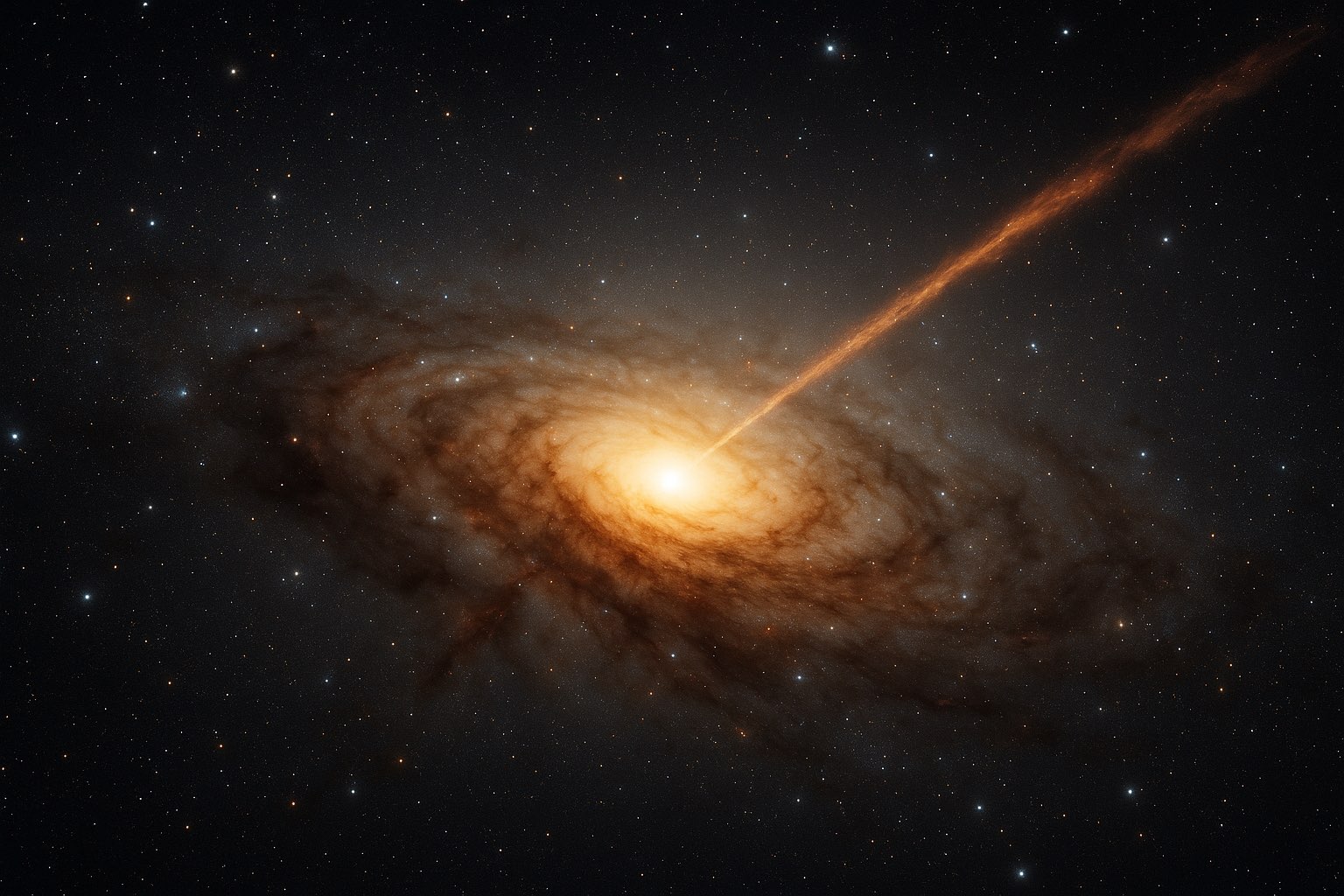
- Cosmic engines: accreting black holes power AGN/quasars and jets
- Galaxy evolution: SMBHs correlate with galaxy properties; feedback may regulate star formation
- New astronomy: gravitational waves let us “listen” to mergers
- Physics frontier: singularities hint at where GR + quantum theory must unify
Why it matters (for students): black holes link motion, light, and spacetime in one topic.
Key Vocabulary
Horizon terms
- Event horizon: boundary where escaping to far away becomes impossible
- Schwarzschild radius
R_s: horizon radius for a non-spinning BH:R_s = 2GM/c^2 - Photon sphere: unstable light-orbit region (~
1.5 R_sfor non-spinning) - Ergosphere: spin-only region where spacetime is dragged; energy extraction becomes possible
Deep interior
- Singularity: where GR predicts “infinite” curvature; signals a breakdown of the theory
- Hawking radiation (theoretical): quantum effect predicting slow evaporation
- Tidal forces: differential gravity (strong gradient) across an object
- Spaghettification: stretching/squeezing near strong tides (especially near small BHs)
Matter and jets
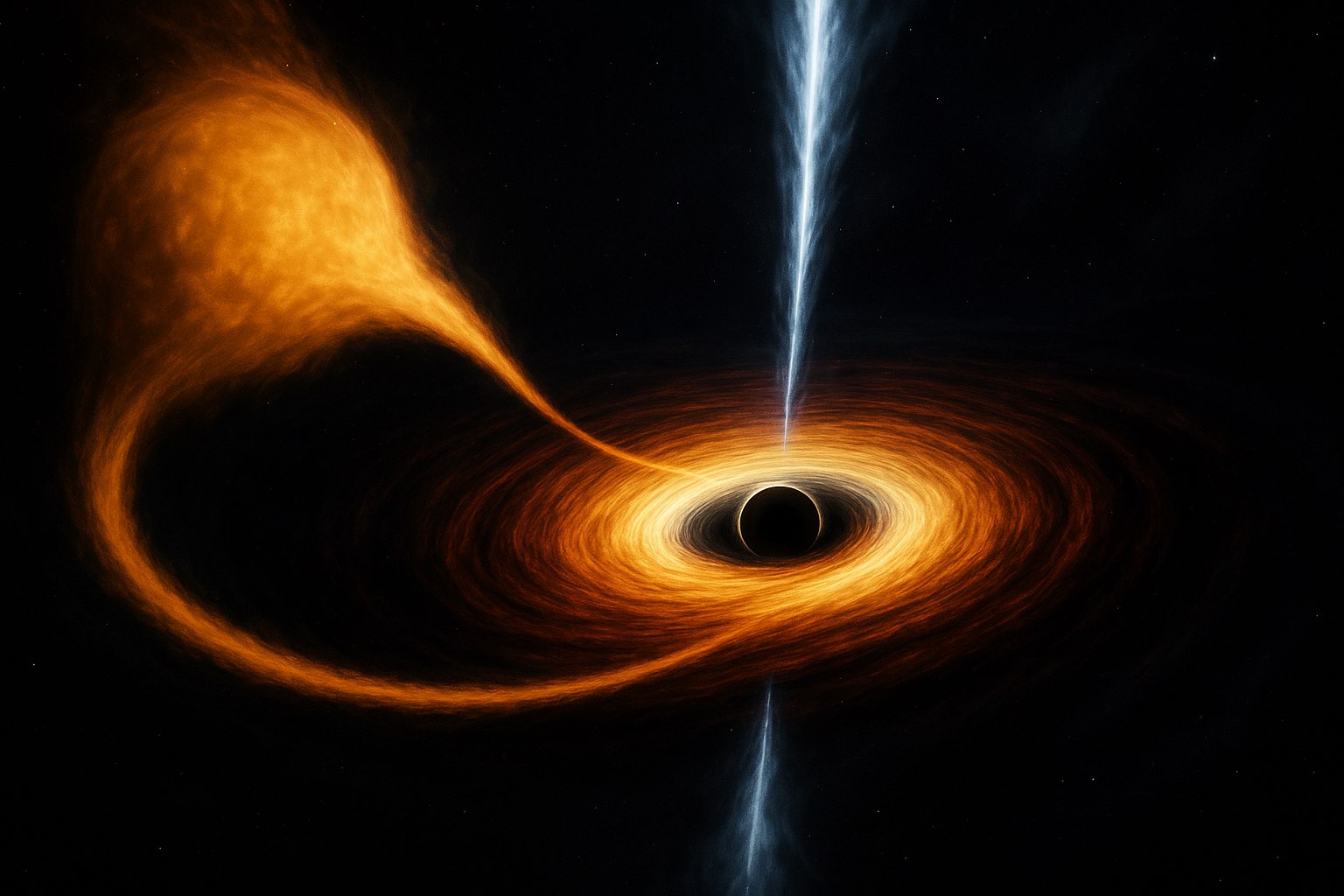
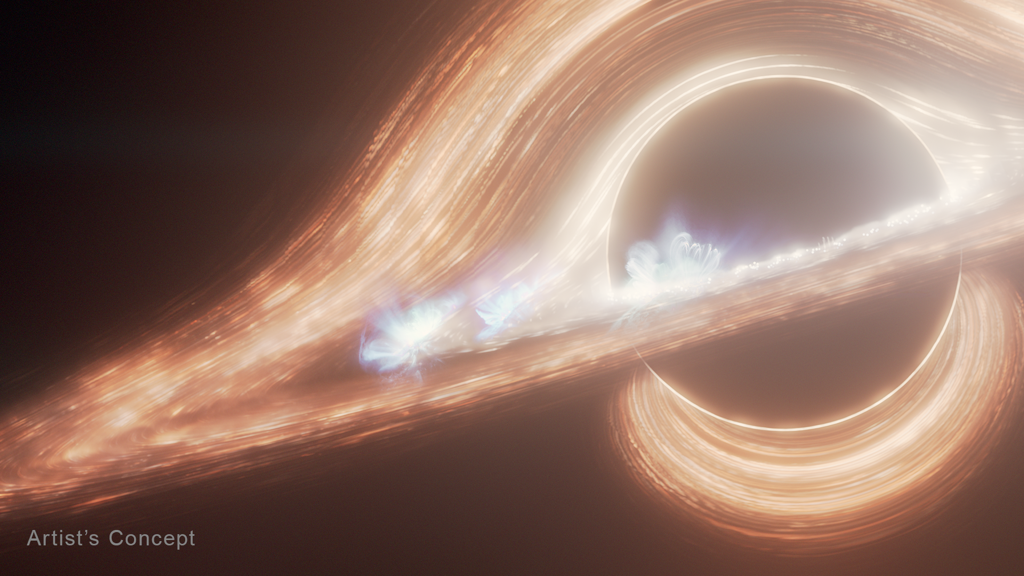
- Accretion disk: rotating gas heats up as gravitational energy → radiation
- Jets: narrow, fast outflows (often near light speed) aligned with the spin axis
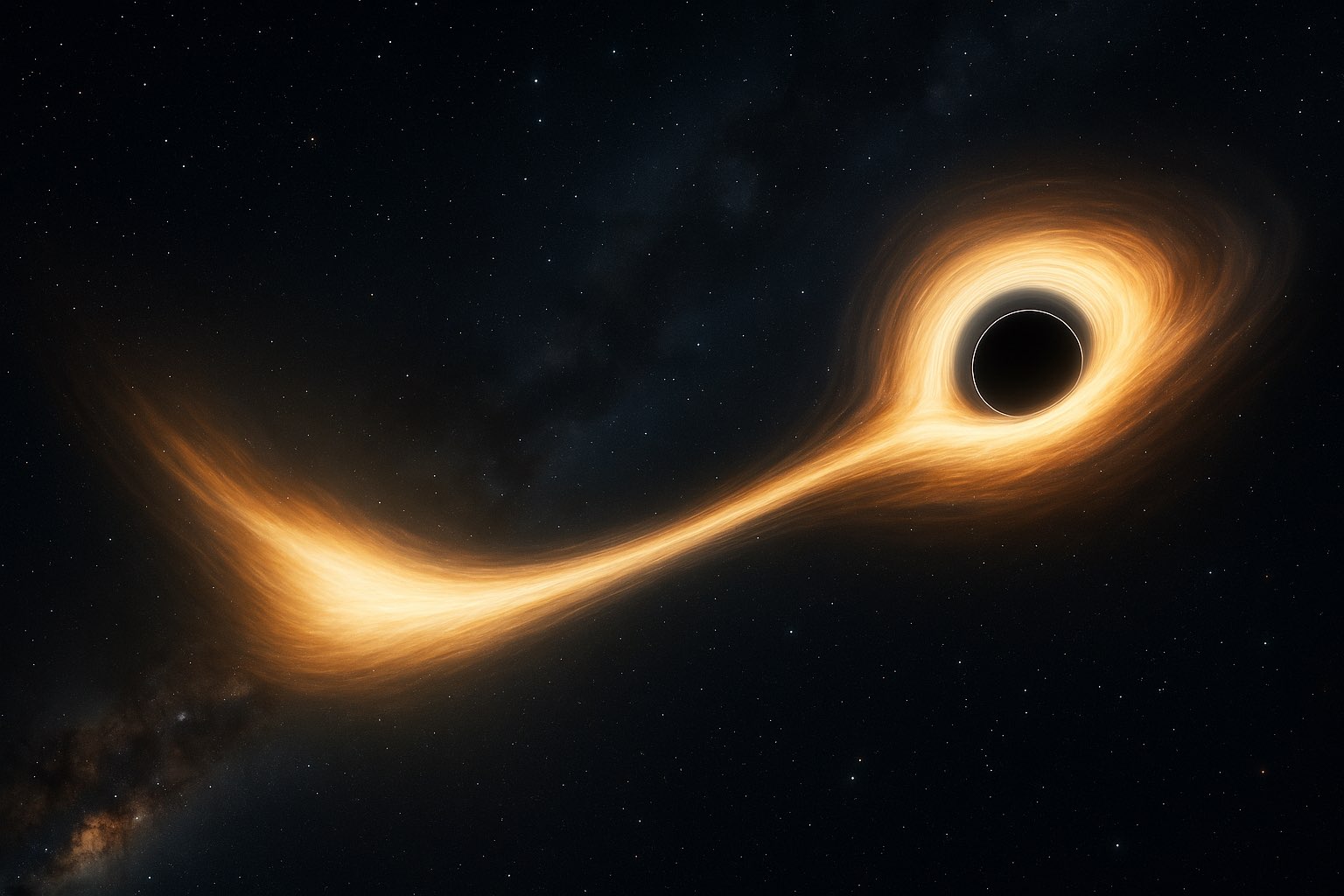
- TDE: tidal disruption event—a star gets torn apart; debris flares as it accretes
- Accretion: not “falling straight in” (angular momentum makes it swirl first)
Light and forces
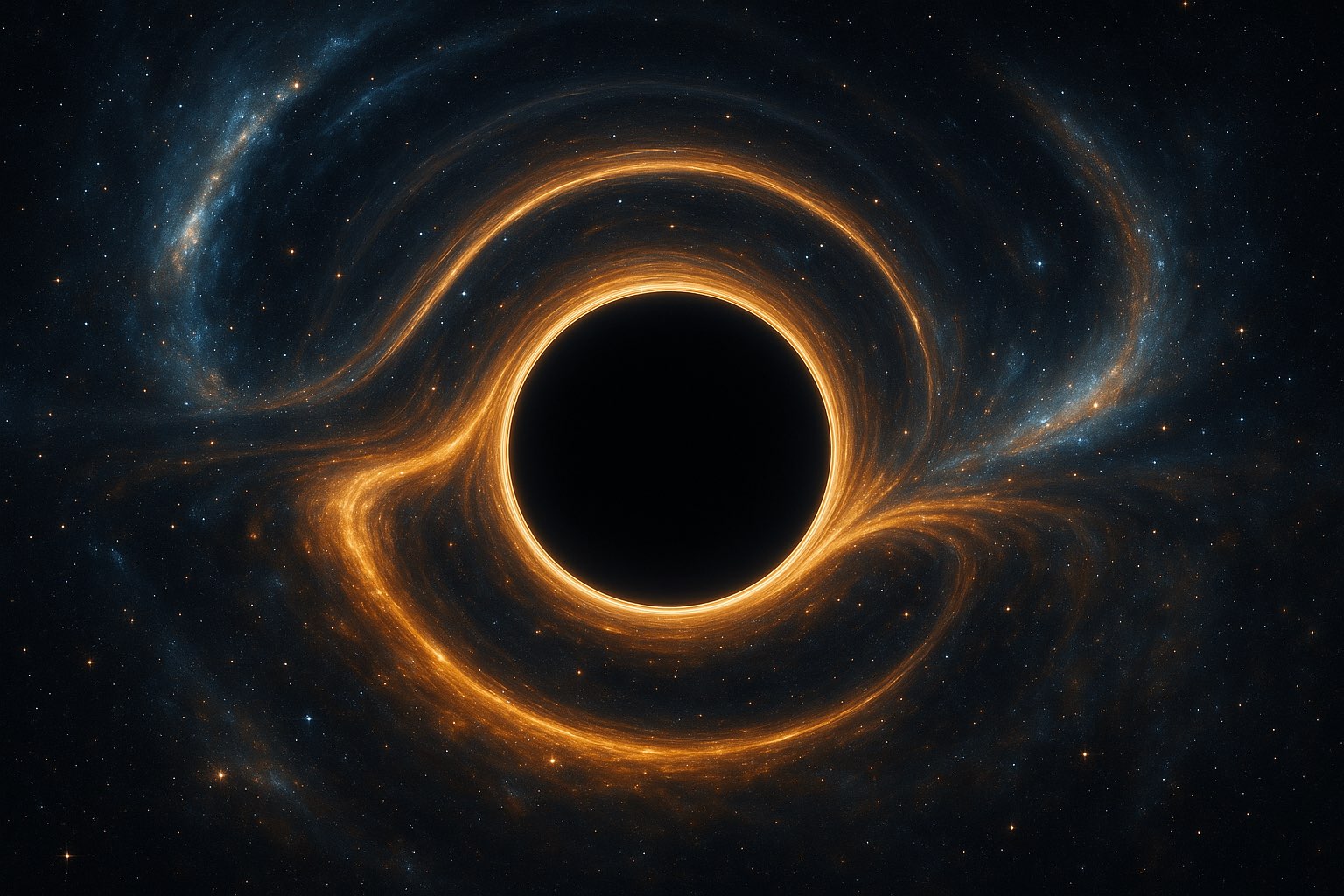
- Gravitational lensing: gravity bends light; can produce arcs, multiple images, Einstein rings
- Redshift: light loses energy climbing out of a deep gravitational well
- Tidal disruption: tides can shred stars before they cross the horizon (depends on BH mass)
- Photon paths: near a BH, “straight lines” in spacetime look curved in space
Signals
- X-rays: inner disk/corona can reach millions of K → X-ray emission
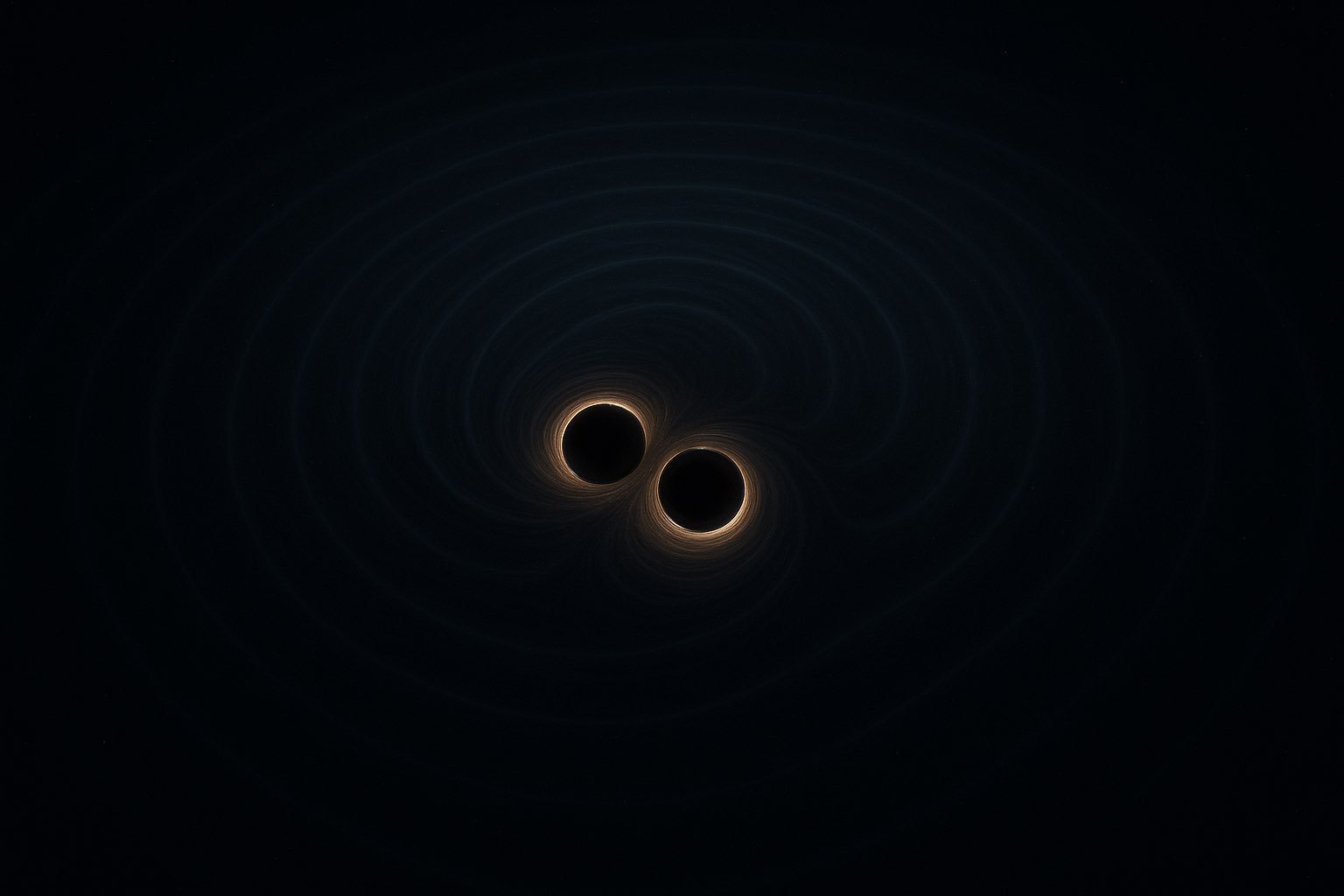
- Gravitational waves: ripples in spacetime from accelerating masses; mergers make a “chirp”
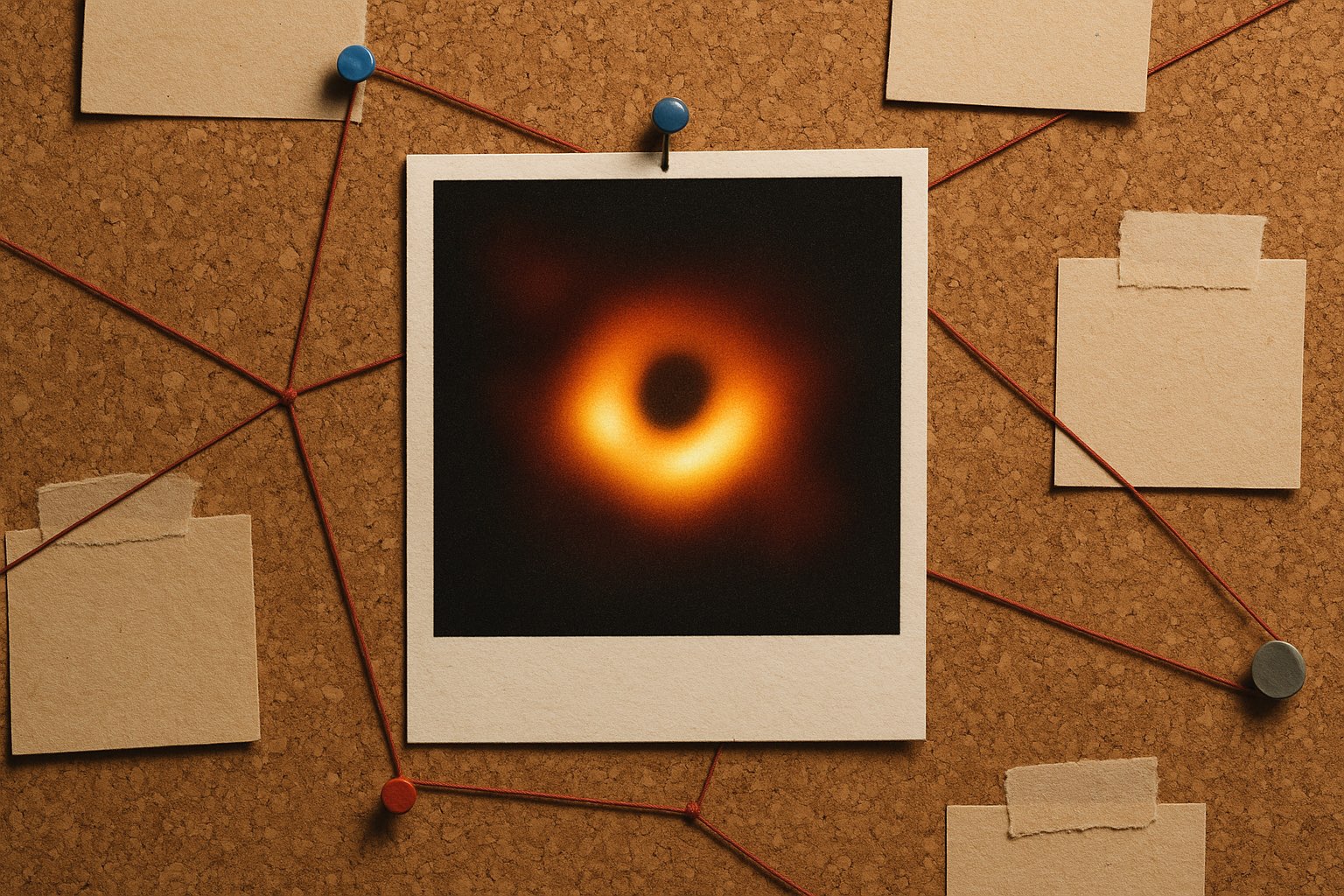
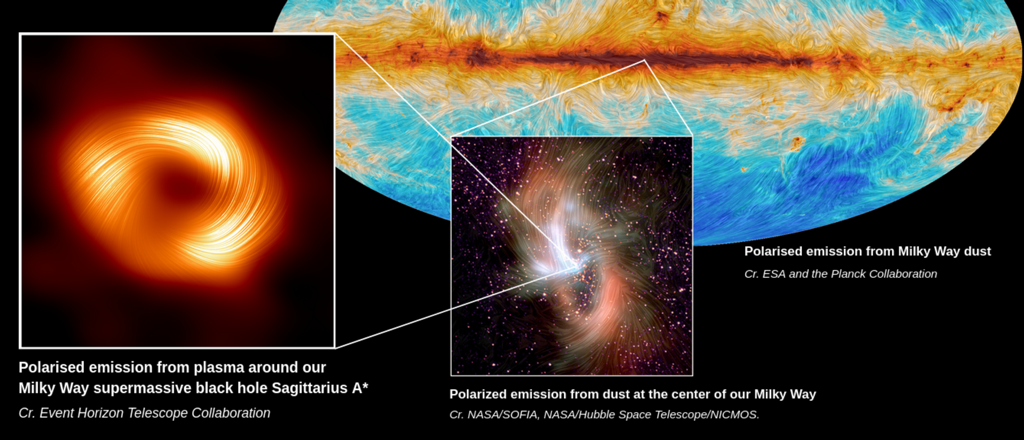
- Shadow: dark region in EHT images caused by photon capture near the horizon (not a “photo of the horizon surface”)
- Jets: synchrotron emission across radio → gamma can dominate a galaxy’s output
Vocabulary strategy: Sort terms by what they describe:
Then ask: Which ones describe the BH itself vs the environment around it?
- Geometry: horizon,
R_s, photon sphere, ergosphere - Matter: accretion disk, jets, TDE
- Signals: X-rays, gravitational waves, lensing
Then ask: Which ones describe the BH itself vs the environment around it?
Types of Black Holes
Stellar-mass
- Typical mass: ~
3–100 M☉(some heavier candidates) - Where: remnants of massive stars; often in X-ray binaries or star clusters
- Best evidence: X-rays from accretion + dynamical mass; GW mergers
Why it matters:
++ connects black holes to stellar evolution and LIGO merger populations
Intermediate
- Typical mass: ~
10^2–10^5 M☉(candidate category) - Where (hypotheses): dense star clusters; dwarf galaxies; some ULX systems
- Challenge: hard to “weigh” precisely; evidence is often indirect
Why it matters:
++ possible bridge between stellar BHs and SMBHs
Supermassive
- Typical mass: ~
10^6–10^10 M☉ - Where: centers of most large galaxies (Milky Way center: Sgr A* )
- When active: accretion powers AGN/quasars and large-scale jets
Why it matters:
++ tied to galaxy growth and cosmic feedback
Scale anchors:
Takeaway: black holes aren’t simply “dense because they’re small”: the horizon radius grows linearly with mass, so the average density inside it falls as 1/M². A stellar-mass hole outdoes an atomic nucleus; one of ~10⁸ Suns averages about the density of water.
R_s ≈ 3 km × (M / M☉)- Sun:
R_s ≈ 3 km(Sun’s real radius is ~700,000 km) - Earth:
R_s ≈ 9 mm(Earth’s real radius ~6,400 km)
Takeaway: black holes aren’t simply “dense because they’re small”: the horizon radius grows linearly with mass, so the average density inside it falls as 1/M². A stellar-mass hole outdoes an atomic nucleus; one of ~10⁸ Suns averages about the density of water.
Formation Pathways
Core-collapse
- Massive star runs out of fuel → core collapses
- If the remnant exceeds the neutron-star stability limit, it becomes a BH
- Fallback material can increase the final BH mass
- Some may be “failed supernovae” (little visible explosion)
Why it matters:
++ links BHs to supernova physics and stellar lifecycles
Direct collapse
- Very massive low-metallicity stars or gas clouds can collapse with less mass loss
- Produces a heavier seed BH, potentially in the early universe
- Helps explain how SMBHs could grow quickly
Why it matters:
++ a leading idea for “how you start” a supermassive BH
Mergers
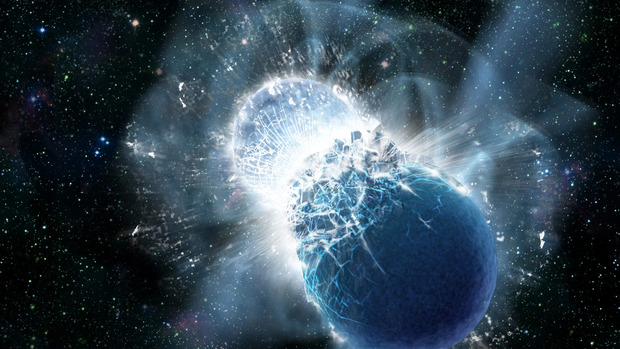
- BH–BH (or BH–NS) binaries inspiral and merge
- Gravitational waves carry away energy and angular momentum
- Mergers grow mass and usually change spin
Why it matters:
++ drives multi-messenger astronomy and BH population studies
Metallicity matters:
Classroom phrasing: “Early-universe stars likely lost less mass, so they could leave bigger black holes.”
- Higher metallicity → stronger stellar winds → more mass loss
- Lower metallicity → weaker winds → heavier remnants
Classroom phrasing: “Early-universe stars likely lost less mass, so they could leave bigger black holes.”
Angular momentum matters:
Big idea: “spin is a stored energy reservoir.”
- Gas with rotation forms an accretion disk instead of falling straight in
- Spin causes frame dragging (Kerr BH) → ergosphere + altered orbits
- Spin + magnetic fields can help power jets
Big idea: “spin is a stored energy reservoir.”
How SMBHs grow over time:
Teaching takeaway: multiple pathways can lead to similar-looking SMBHs.
- Accretion (steady or bursty) adds mass
- Mergers combine BHs and boost mass/spin
- Very rapid growth is limited by how fast gas can fall in without blowing itself away (Eddington-style limits)
Teaching takeaway: multiple pathways can lead to similar-looking SMBHs.
Anatomy and Physics
Escape velocity
- Intuition:
v_escaperises as you get closer to a mass - If you set
v_escape = c, you get the Schwarzschild radiusR_s - Inside
R_s, “escaping outward” to far away is no longer possible
Why it matters:
++ connects a familiar idea (escape speed) to the horizon concept
Curved spacetime
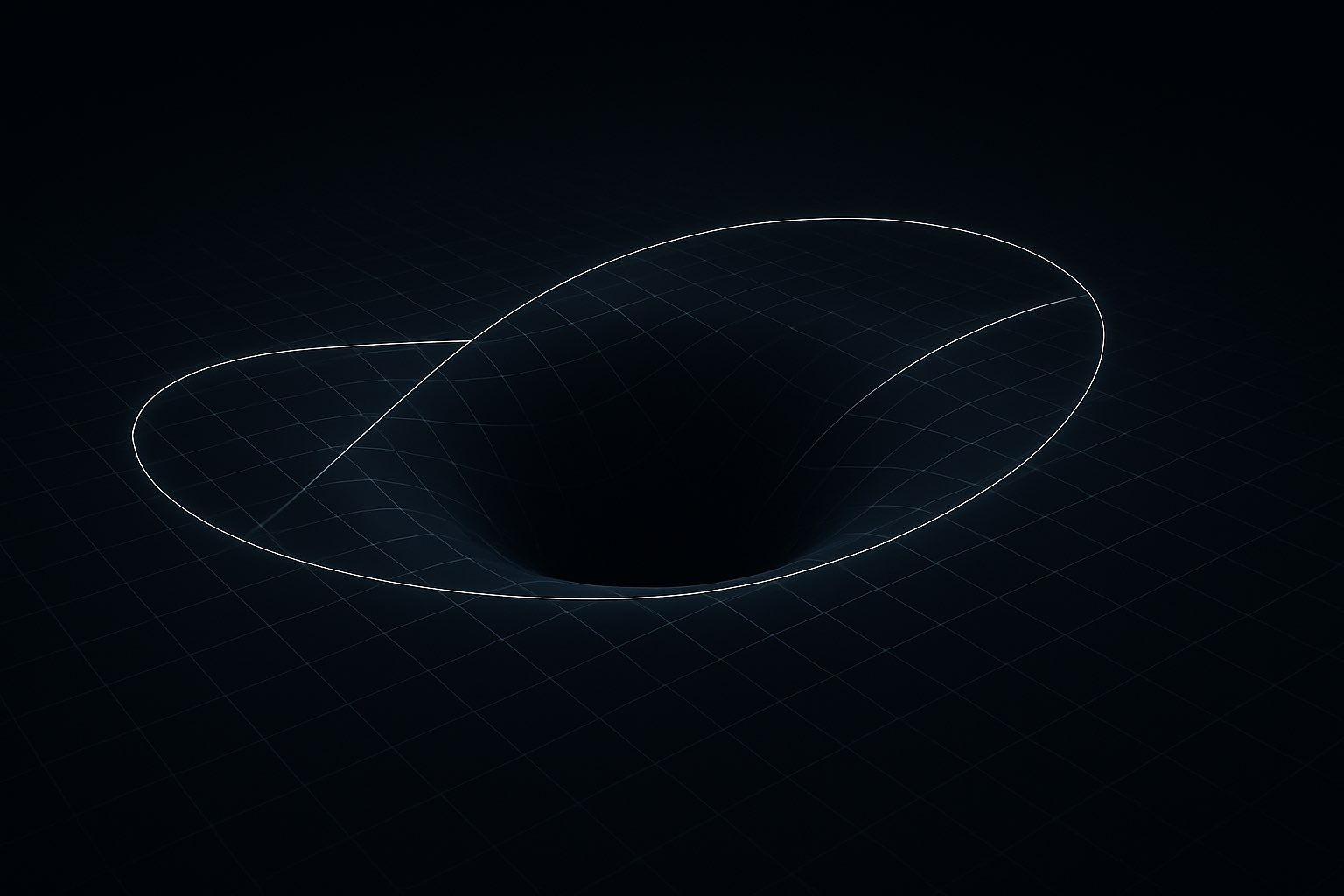
- In GR, gravity is not a force pulling through space; objects follow geodesics in curved spacetime
- Light also follows geodesics → lensing and “photon rings”
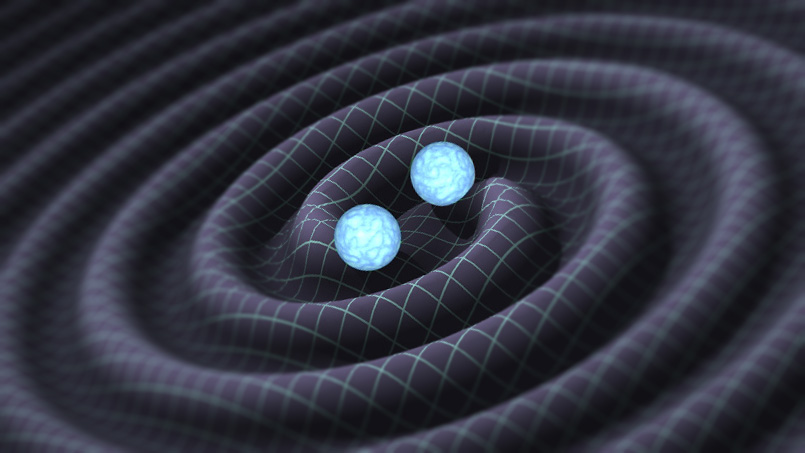
- The popular “rubber sheet” analogy is useful but imperfect
Why it matters:
++ explains why black holes affect light and time, not just motion
Event horizon
- The horizon is a boundary in spacetime, not a material surface
- Locally (for a falling astronaut), crossing can feel uneventful for large BHs
- For a distant observer, infalling light becomes redshifted and dim
Why it matters:
++ clarifies “nothing escapes” and prevents the “solid surface” misconception
Time effects
- Time dilation: clocks deeper in a gravity well tick slower relative to far-away observers
- Gravitational redshift: light loses energy climbing out → shifts to longer wavelengths
- For the infaller: reaching the horizon can take finite proper time
Why it matters:
++ helps students interpret what “we see” vs what happens locally
Rubber-sheet analogy (use with caveats):
Better phrasing: “The sheet is a picture of geometry, not a literal model.”
- Good for: showing “paths bend” and why orbits happen
- Misleading because: it uses Earth’s gravity to make the dip; it’s 2D; it can suggest a “downward force”
Better phrasing: “The sheet is a picture of geometry, not a literal model.”
How We See Them
Accretion glow
- Gas spirals in; friction + magnetic turbulence convert gravitational energy → heat
- Inner disk can reach millions of K → X-rays
- Brightness can vary fast → clue to a small emitting region
Why it matters:
++ the BH is dark, but the infalling environment isn’t
Orbit evidence
- Measure a star’s speed + orbit size → infer central mass (Kepler/gravitation)
- If the mass is packed into an extremely small region with no light source, a BH is a strong candidate
- Classic example: stars orbiting the Milky Way’s center (Sgr A* region)
Why it matters:
++ “weighing the invisible” is a cornerstone of astronomy
EHT imaging
- Interferometry: combine many radio telescopes → Earth-sized “virtual telescope”
- Uses millimeter wavelengths to see through some dust and resolve tiny angles
- Image is a reconstruction from sampled data (not a single camera snapshot)
Why it matters:
++ gives horizon-scale tests of GR via the shadow’s size/shape
GW chirp
- Inspiral speeds up → wave frequency increases (“chirp”)
- The waveform encodes masses, spins, distance, and merger dynamics
- After merger, the remnant “rings down” like a struck bell
Why it matters:
++ direct evidence for BH binaries and strong-field gravity
Jet power
- Magnetic fields in the disk can collimate plasma into jets
- Spin + fields may extract rotational energy (often taught as the “BH + disk dynamo” idea)
- Jets can extend far beyond the galaxy and heat/reshape surrounding gas
Why it matters:
++ explains how BHs can influence galaxy-scale environments
Case Studies
Sgr A*
- Milky Way center supermassive BH
- Mass: ~4 million
M☉ - Key evidence: stellar orbits tightly bound around an unseen central mass
- Horizon-scale: EHT result consistent with GR expectations
What it teaches:
++ “weighing” a BH via orbits + testing horizon-scale predictions
M87*
- Supermassive BH in galaxy M87
- Mass: ~6.5 billion
M☉ - Famous for: a powerful relativistic jet
- EHT: first widely published BH shadow image (2019)
What it teaches:
++ links accretion + magnetic fields + jets to a BH engine
X-ray binary
- A stellar-mass BH with a companion star
- Matter pulled from the star forms a hot disk → X-rays
- Timescales are fast (seconds–days), so variability is easy to observe
What it teaches:
++ same physics as AGN, but “fast-forward” and closer to home
Misconceptions
Myth: “Black holes suck everything.”
Fix: gravity at a distance depends on mass, not on “being a black hole.”
Fix: gravity at a distance depends on mass, not on “being a black hole.”
- Stable orbits exist
- You only get doomed if you pass close enough that tides / horizon crossing becomes unavoidable
Myth: “Nothing can escape, so we can’t learn anything.”
Fix: nothing escapes from inside the horizon, but lots escapes from outside:
Fix: nothing escapes from inside the horizon, but lots escapes from outside:
- light from accretion disks and jets
- motion of orbiting stars/gas
- gravitational waves from mergers
Myth: “The singularity is a real point we fully understand.”
Fix: the singularity is best treated as a sign that GR breaks down under extreme conditions.
Fix: the singularity is best treated as a sign that GR breaks down under extreme conditions.
- quantum gravity is expected to matter
- the horizon is well-defined; the interior physics is where models become uncertain
Safety rails
- Say “region” and “boundary” more than “object”
- Emphasize: event horizon ≠ surface
- Keep “inside horizon” distinct from “nearby environment”
- When using analogies: explicitly name what the analogy does and does not represent
Why it matters:
++ keeps students from building wrong mental models that block later understanding
Demos and Activities
Fabric well
Materials: stretch fabric, a heavy ball, marbles.
Caveat: a 2D surface is not spacetime; say this out loud.
Why it matters:
++ makes “curvature changes paths” tangible
- Roll marbles to show “orbits” and inward spirals (energy loss)
- Ask: what makes the spiral happen in the demo (friction) vs in space (radiation/torques)?
Caveat: a 2D surface is not spacetime; say this out loud.
Why it matters:
++ makes “curvature changes paths” tangible
Orbit sim
- Use an online orbit simulator (or paper model) to explore:
++ changing initial velocity
++ adding a small “drag” term to mimic accretion disk losses
Guided questions:
- What changes the orbit shape vs the orbit speed?
- What observations would let you estimate the hidden mass?
Quick calc
Station: order-of-magnitude Schwarzschild radius.
Prompt: “How much would you have to compress Earth to make it a BH?”
- Use
R_s = 2GM/c^2or the shortcutR_s ≈ 3 km × (M/M☉) - Compute Earth: ~9 mm
- Compute Sun: ~3 km
Prompt: “How much would you have to compress Earth to make it a BH?”
Data mini-lab
Interpretation (qualitative):
Goal: match “shape of data” to “physical story.”
- Light curve: what does a flare/dip tell you about size and timescale?
- TDE: sudden brightening then fading can indicate a star being torn apart
- GW chirp: frequency rises as orbit shrinks → merger
Goal: match “shape of data” to “physical story.”
Guiding prompts for any station:
(Works well as a CER scaffold: Claim–Evidence–Reasoning.)
- What is the claim (BH present / BH properties)?
- What is the observable (light, orbit, wave)?
- What assumptions connect the observable to the claim?
- What alternative explanation could mimic it?
(Works well as a CER scaffold: Claim–Evidence–Reasoning.)
Low-cost station plan (45–60 min):
Teacher tip: make one station explicitly about misconceptions.
- 10 min: hook + vocabulary warm-up
- 20 min: 4 stations (fabric / orbit / calc / data)
- 10 min: whole-class “evidence chain” share-out
- 5 min: exit ticket
Teacher tip: make one station explicitly about misconceptions.
Micro-lecture
0:00
0:00
Black Holes: A 2-Minute Micro-Lecture
Audio
Micro-lecture A
Today we’re exploring one of the most fascinating predictions of Einstein’s general relativity: black holes. A black hole isn’t an object with a hard surface—it’s a region of space where gravity curves spacetime so strongly that, inside a boundary called the event horizon, nothing that carries information—not even light—can escape to the outside.
So how can we study something that’s “black”? We look for its effects. One major clue is motion: if we see stars or gas orbiting something extremely massive, but we can’t see the mass itself, that invisible mass is a strong black-hole candidate—especially at the centers of galaxies.
Micro-lecture B
Another key method is accretion. When gas falls toward a black hole, it doesn’t usually drop straight in. It forms an accretion disk, heating up as friction and magnetic turbulence convert gravitational energy into radiation. That hot disk can shine intensely, often in X-rays. Some systems also launch narrow jets at near-light speed, powered by magnetic fields and the spinning black hole–disk system.
In 2019, the Event Horizon Telescope provided a new kind of evidence: a “shadow” image of the black hole in galaxy M87. The bright ring comes from superheated gas and light being bent by gravity; the dark center is the shadow region created by the event horizon’s gravitational influence.
And black holes can announce themselves through gravitational waves. When two black holes spiral together and merge, they send ripples through spacetime. Detectors like LIGO can measure these tiny distortions, letting us “listen” to black hole collisions.
One last misconception: black holes don’t roam around vacuuming the universe. If our Sun were replaced by a black hole of the same mass, Earth’s orbit would stay essentially the same—what changes is what happens very, very close to the event horizon. Black holes are extreme laboratories for gravity, and they help us test the limits of physics.
Delivery tips (2 minutes):
Optional add-on: Ask students to name one indirect detection method that impressed them most and why.
- Pause after “event horizon” and ask: surface or boundary?
- Use the sequence: motion → accretion → shadow → waves
- End with the “Sun replaced” line to inoculate against the vacuum myth
Optional add-on: Ask students to name one indirect detection method that impressed them most and why.
Discussion and Assessment
Discussion prompts
- What counts as evidence when you can’t see an object directly?
- Why is indirect detection so powerful in astronomy?
- Should society spend billions on “big science” projects (EHT, LIGO)? What benefits justify costs?
- If two models explain the same data, how do scientists choose between them?
- What’s one misconception you had that changed, and what evidence changed it?
Exit ticket
- Define event horizon in one sentence.
- List two ways we detect black holes.
- Pick one misconception and explain why it’s wrong.
Grading idea: 1 point each for correctness + 1 point for clarity (total 4).
Extension
Compare: black holes vs neutron stars
Prompt: What observation could distinguish a BH from a neutron star in a binary?
- Both: compact remnants; strong gravity; can accrete and emit X-rays
- Neutron star: surface + possible pulsar beams; max mass is limited
- Black hole: event horizon; no surface; can merge into larger BHs
Prompt: What observation could distinguish a BH from a neutron star in a binary?
Rubric sketch
- Concepts: horizon vs surface; accretion; indirect evidence
- Evidence use: connects observation → inference (not just naming)
- Communication: clear definitions; correct terms
- Scientific thinking: notes assumptions + alternative explanations
Why it matters: helps students practice argument from evidence.
Evidence chain template (CER):
Use this to turn each detection method into a mini argument.
- Claim: “A black hole is present” (or: estimate mass/spin)
- Evidence: orbit data / X-ray spectrum / shadow size / GW chirp
- Reasoning: which physics links evidence → claim?
- Checks: what else could mimic it? what extra measurement would help?
Use this to turn each detection method into a mini argument.
Resource Links

Resources - NASA Science
science.nasa.gov
Black Holes - NASA Science
science.nasa.gov

NASA’s Traveler: Field Guide to Basic Black Holes
plus.nasa.gov

A Field Guide to Black Holes Booklet - NASA Science
science.nasa.gov
The Event Horizon Telescope
eventhorizontelescope.org
Sources and Types of Gravitational Waves
ligo.caltech.edu
Educational Resources
ligo.caltech.edu

Event Horizon Telescope
nsf.gov
Starter resources
- NASA overview for students and teachers
- NASA Black Hole Week classroom-ready materials
- NASA “Field Guide” booklet for structured reading
- NASA+ short video explainer for a quick intro
- EHT + NSF toolkit for primary-source shadow explanations
- LIGO pages for merger/GW basics and classroom activities
Sources: